
Podbean supports two ways to turn video content into a podcast:
- Import videos from a YouTube playlist
- Import videos from a video RSS feed
This guide explains how to start the Video to Podcast import process, choose a content source, set the import options, and check the import status.
Note: This feature is supported starting from the Podbean Unlimited Audio Plan.Step 1: Start the Video to Podcast import
Sign up for a Podbean account and select Import Existing Podcast on the initial page.
If you already have a Podbean account, create a new channel for your video content.
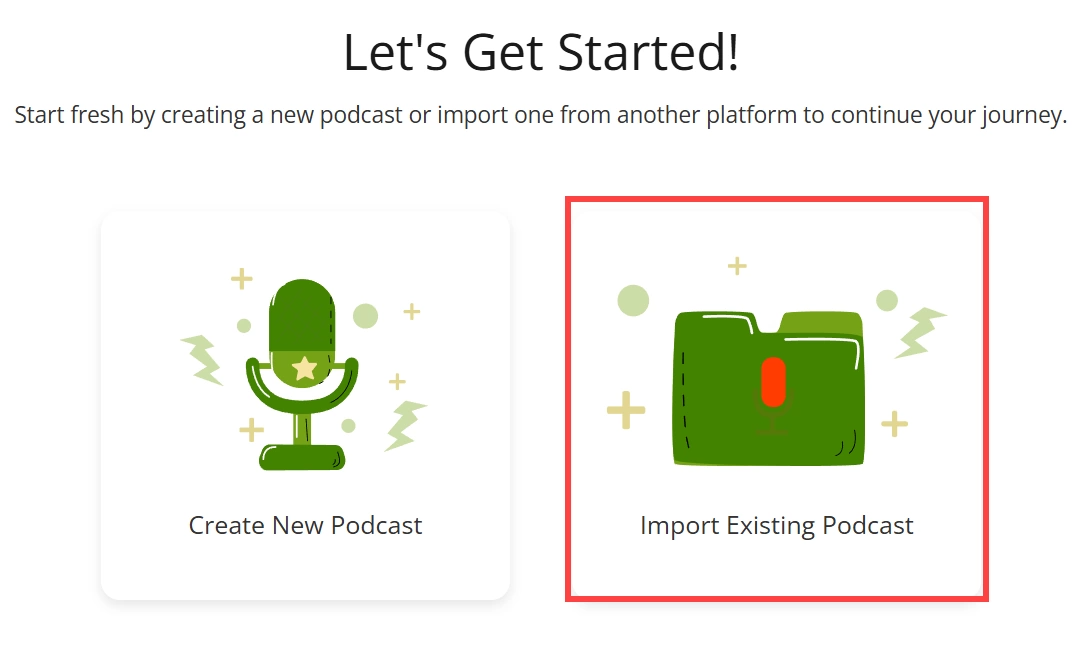
From your podcast dashboard, click Import Existing Podcast.
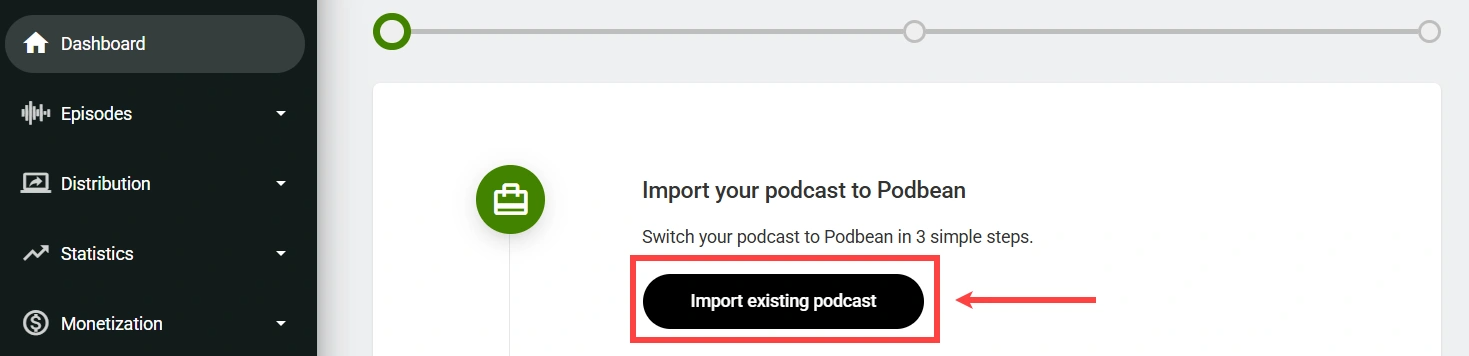
On the Import to Podbean page, choose Video to Podcast.

Step 2: Select your content source
For content source, choose one of the two available import methods (Click on the option name below to jump directly to the setup steps for that import method).
- YouTube Playlist: Choose this option if you are a YouTube creator and want to import videos from a YouTube playlist.
- RSS Feed URL: Choose this option if you want to import videos from a video RSS feed.
Option A: Import from a YouTube playlist
Choose YouTube Playlist as your content source.
Enter your YouTube channel handle to search for your channel.
Select the playlist you want to import to Podbean.
Podbean will auto-import the latest 10 videos.
Not sure what your YouTube Handle is? Click here to learn more.
After selecting your YouTube playlist, set the import options.
- Convert to Audio Podcasts
Choose this option if you want to convert your YouTube videos into audio podcasts.
- Convert to Video Podcasts
Choose this option if you want to turn your YouTube videos into video podcasts.
- Future Content Sync
Turn this on if you want Podbean to auto-sync future YouTube videos. When this option is enabled, Podbean will import and publish new videos in your selected format to your podcast channel.
- Import YouTube Thumbnail
Turn this on if you want Podbean to import the YouTube thumbnail as your podcast and episode logos.
Note: The YouTube thumbnail may not fit the square podcast and episode logo format.
The import process may take some time, depending on the size of your video files. You can check back later to view the importing status.
Imported episodes are first saved as Draft and switch to Published after they are successfully imported into Podbean.
On the success page, you'll find your connected YouTube playlist. Additionally, you can toggle Podbean syncing for new YouTube videos on or off.
Note: Once a video is imported to Podbean, updates made to the video on YouTube will not be reflected on Podbean. Changes made to episodes or new episodes published directly on Podbean will not sync back to YouTube.
Option B: Import from a video RSS feed
Choose RSS Feed URL as your content source.
Enter your video RSS feed URL.
Podbean will retrieve the latest 10 videos, convert them into MP3 audio format for your podcast, and automatically publish them.

After entering your video RSS feed URL, set the import options for your video RSS feed.
- Future Content Sync
Turn this on if you want Podbean to auto-sync future videos. When this option is enabled, Podbean will automatically import and publish newly added content from your connected content source.
- Import podcast info and Apple Podcast settings from the RSS feed
Keep this option selected if you want to import podcast information and Apple Podcast settings from the RSS feed. Uncheck this option if you only want to import episodes from your RSS feed.

The import process may take some time, depending on the size of your video files. You can check back later to view the importing status.
Imported episodes are first saved as Draft and switch to Published after they are successfully imported into Podbean.
On the success page, you'll find your connected YouTube playlist. Additionally, you can toggle Podbean syncing for new YouTube videos on or off.